FKM, NBR, and specialist elastomer components for process pipework, tank sealing, pump protection, and equipment in aggressive chemical environments — compound selection is everything.
 Request a Quote
 Explore our products
In chemical processing, compound selection is not a preference — it is a safety and reliability requirement. The wrong rubber compound in contact with an aggressive chemical will swell, harden, crack, or dissolve. A seal that fails in a chemical process line is not just a maintenance problem. Our engineers assess your specific chemical contact, concentration, temperature, and pressure before recommending a compound.
The chemical industry handles acids, alkalis, solvents, hydrocarbons, and reactive intermediates — often at elevated temperatures and pressures. Each fluid requires a specific rubber compound. FKM provides the broadest chemical resistance; NBR for hydrocarbons and oils; EPDM for steam, water, and dilute acids.
Process environments often combine elevated temperature with aggressive chemistry — conditions where standard compounds fail rapidly. FKM’s service temperature to +200°C combined with exceptional chemical resistance makes it the specified material for demanding process positions.
In gas-phase chemical systems, rubber component permeability to the process gas is a functional requirement. FKM has very low gas permeability — relevant for chemical reactor sealing and gas-phase process equipment.
Chemical process screening operations require rubber screen balls that are chemically compatible with the screened fluid. Contamination from incompatible rubber compounds is a production and quality risk.
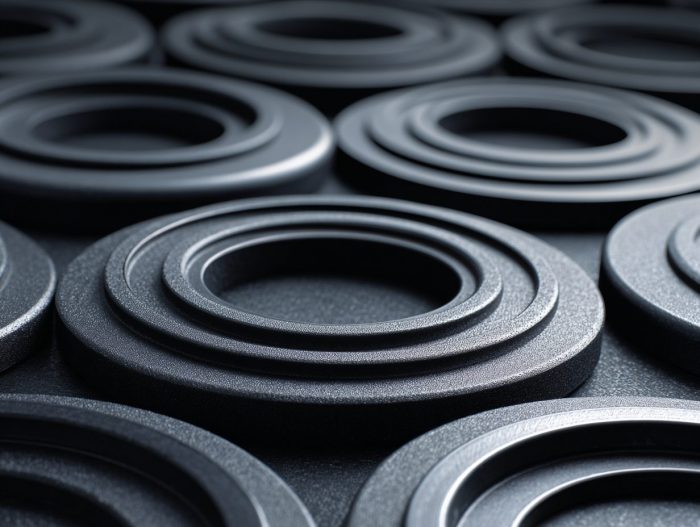
URM supplies chemical-resistant rubber components in FKM, NBR, EPDM, and silicone for the chemical processing industry — from extruded sealing profiles to process hoses, expansion bellows, and moulded components.
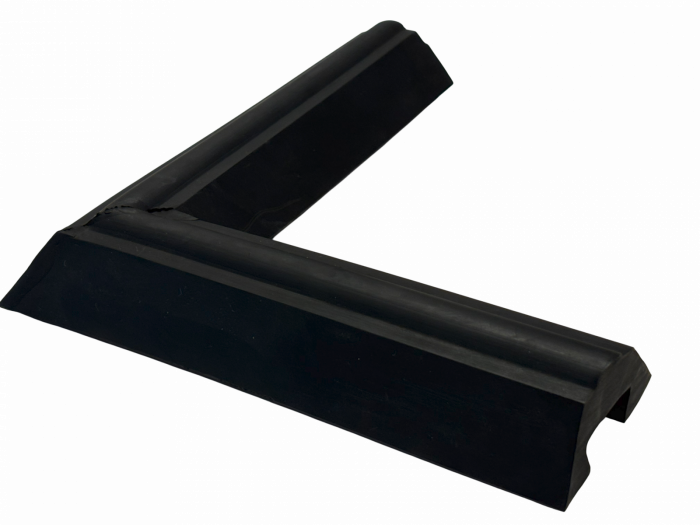
Chemical-Resistant Extrusions
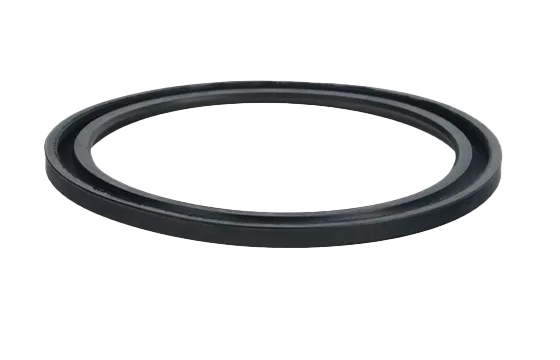
Machine seal profiles, enclosure door seals, conveyor edge strips, acoustic dampening strips, and protective profiles. Any cross-section, any compound — EPDM, NBR, silicone, neoprene, FKM.
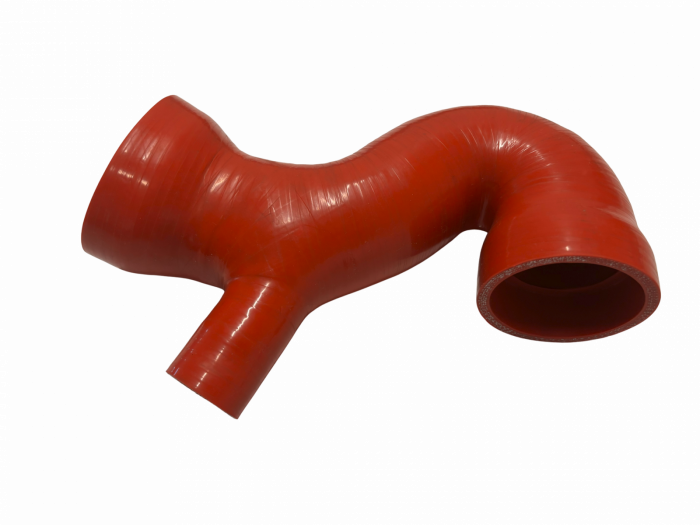
Chemical-Resistant Hoses
Process hoses in NBR, FKM, EPDM, and silicone for chemical transfer, solvent lines, acid and alkali duty, and steam systems. Custom compound specification with pressure and temperature rating.
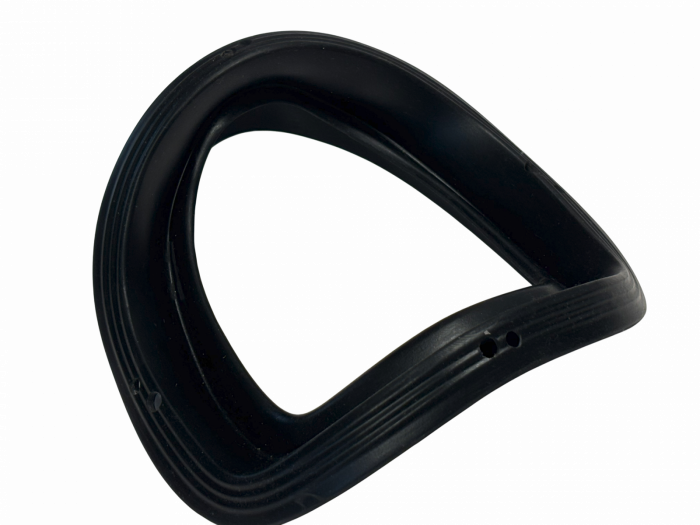
Custom Rubber Moulded Parts
Chemical-resistant moulded gaskets, valve seats, diaphragms, and sealing elements. FKM for aggressive positions; EPDM for steam and water duty; NBR for oil and hydrocarbon applications.
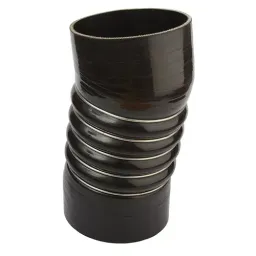
Chemical-Resistant Bellows
Expansion bellows and flexible connectors in FKM, EPDM, and NBR for chemical process pipework. Accommodates thermal movement and vibration in pipe systems carrying aggressive fluids.
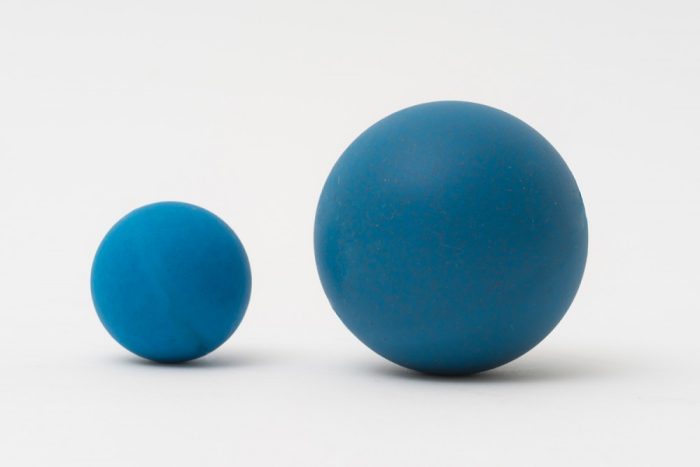
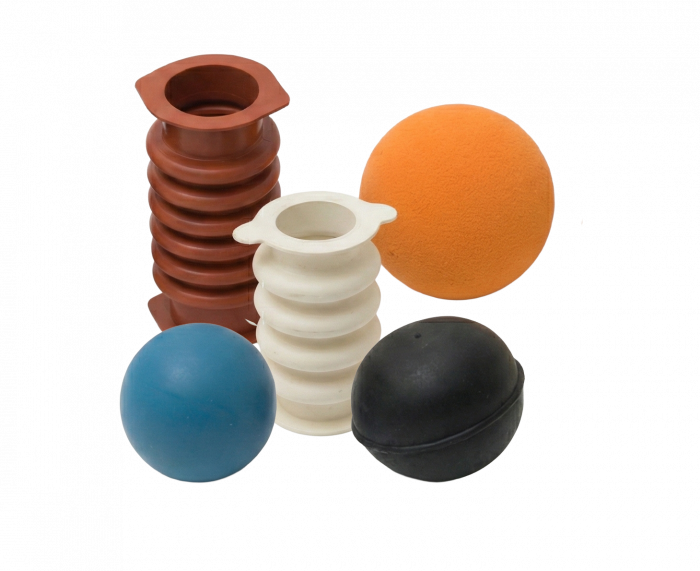
Chemical-Grade Screen Balls
Rubber screen balls in chemical-resistant compounds for vibrating screens processing chemical products, fertilisers, and mineral process streams.
URM chemical-resistant rubber components are used throughout the chemical process industry — in primary chemical production, fertilisers, polymers, pharmaceuticals, and petrochemicals.
FKM and NBR gaskets and hoses for chemical process pipework, reactor connections, and pipe flanges in aggressive chemical environments. Compound specified per process fluid and temperature.
Chemical-resistant rubber seals and gaskets for storage tank nozzles, manholes, and inspection covers. FKM for solvent and hydrocarbon tanks; EPDM for acid and alkali storage.
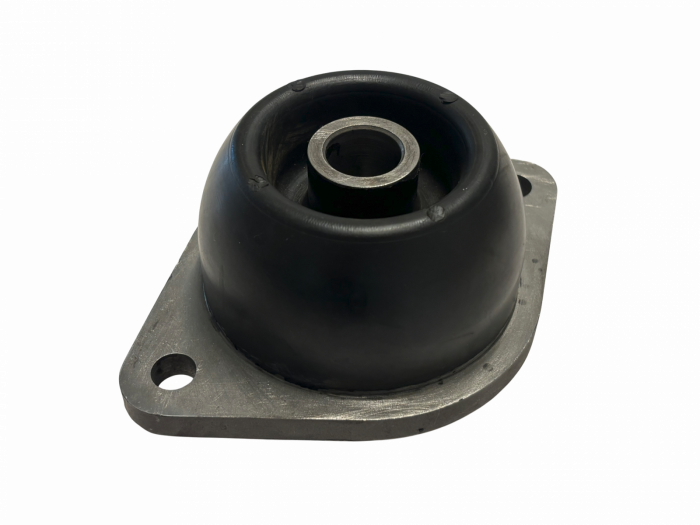
Moulded rubber diaphragms, valve seats, and pump sealing elements for chemical duty pumps and valves. Compound selection based on pumped fluid, temperature, and operating pressure.
Reinforced rubber hoses for bulk chemical transfer — acids, alkalis, solvents, and chemical intermediates. NBR for hydrocarbon duty; EPDM for acids and steam; FKM for aggressive solvents.
FKM sealing profiles and gaskets for process positions combining high temperature (+130°C to +200°C) with chemical exposure — where EPDM or NBR would fail.
EPDM and NBR rubber components for fertiliser production, agrochemical mixing, and pesticide processing equipment. Chemical compatibility verified against specific process fluid.
NBR and FKM sealing components for petrochemical processing equipment, refinery instrumentation, and hydrocarbon process systems.
Chemical-compatible rubber screen balls for vibrating screens processing chemical products, polymer granules, and mineral process streams.
1. FKM expertise for the most demanding positions
FKM (Viton®) is the highest-performance chemical resistance compound available. We produce FKM extrusions, gaskets, hoses, and moulded parts — and our engineers understand the specific formulation requirements for different chemical environments.
2. Chemical compatibility assessment
We assess your specific chemical contact, concentration, and temperature before recommending a compound. The wrong compound costs more than the right one — we will not supply a product that will fail in your process.
3. Full compound range in-house
FKM, NBR, EPDM, silicone, and neoprene — all available for chemical applications. One qualified supplier for the full sealing and fluid handling rubber component range across your process plant.
4. ISO 9001 material traceability
Chemical process industries require documented material traceability for safety-critical sealing components. Our ISO 9001 QMS provides compound certification and batch traceability on every delivery.
5. Process-specific engineering support
Chemical process rubber components require engineering assessment. Our team works with process engineers and plant operators to specify the correct component for each process position.
6. Belgium-based, EU chemical industry supply
URM has been headquartered in Belgium since 1935 — at the centre of the European chemical industry cluster. Fast EU delivery to process plants, equipment manufacturers, and engineering contractors.
FKM (Fluoroelastomer, commercially known as Viton®) offers the broadest and deepest chemical resistance of any commonly used rubber compound. It resists most acids, fuels, oils, hydraulic fluids, and aromatic solvents — and operates to +200°C. NBR is the standard for petroleum hydrocarbons and oils at lower temperatures; EPDM for steam, hot water, and dilute acids; silicone for high-temperature and food contact. No single compound is universal — compound selection must be assessed against your specific chemical and temperature conditions.
The correct acid-resistant compound depends on the acid type, concentration, and temperature. EPDM has good resistance to dilute acids and steam. For concentrated mineral acids or at elevated temperatures, FKM may be more appropriate. Our engineers require the specific acid, concentration, operating temperature, and pressure before recommending a compound — acid resistance is not a generic property.
Chemical-grade rubber screen balls are rubber spheres used in vibrating screens processing chemical products, fertilisers, polymer granules, and mineral process streams where the screened material or carrier fluid is chemically aggressive. The rubber compound must be compatible with the chemical contact to prevent degradation, contamination, or premature failure. Standard rubber screen balls made from incompatible compounds will swell and degrade in chemical-contact screening environments.
Yes. URM produces FKM rubber bellows and expansion joints for chemical process pipework where thermal movement, vibration, or misalignment accommodation is required in lines carrying aggressive fluids. FKM bellows maintain their integrity in contact with solvents, concentrated acids, and high-temperature process fluids where other compounds would fail. Custom geometry produced from your piping specification.
Yes. For solvent transfer duty, we specify the compound based on the specific solvent — EPDM for ketones and alcohols, NBR for aliphatic hydrocarbons, FKM for aromatic solvents and chlorinated compounds. Please provide the solvent name, concentration, operating temperature, and system pressure when enquiring. Solvent compatibility must be assessed against each specific compound.
The correct approach is to assess your specific chemical, concentration, and temperature against published compound compatibility data, then confirm compatibility through testing for critical applications. URM's engineers use compound compatibility charts as the first step. For unusual chemicals or operating conditions at the limits of published data, we recommend testing a sample component in your process conditions before committing to full production supply.
Tell us your process fluid, concentration, temperature, and pressure. Our engineering team will assess chemical compatibility and specify the correct compound — then respond with a proposal for supply.
 Request a Quote
View all products
Request a Quote
View all products